Why AI Health Assistance Must Be Built into Trusted Treatment Ecosystems

Why AI Health Assistance Must Be Built into Trusted Treatment Ecosystems

Mighty, AI health AssistantMighty, AI health Assistant

Key Takeaways

Every day, millions of people now ask AI about their health.

Instead of searching across multiple websites, many start with a conversation about symptoms, medications, or treatment progress. Recent estimates suggest that more than 40 million people ask AI health-related questions every day, making healthcare one of the fastest growing uses of AI.
But healthcare cannot treat AI like any other digital tool.

In most industries, conversational AI is designed for convenience and speed. In healthcare, the requirements are fundamentally different: accuracy, clinical context, data privacy, and patient safety are essential.

This raises a critical question: If patients are already asking AI about their health, where should those conversations happen?

Increasingly, healthcare leaders believe the answer is clear: inside trusted treatment ecosystems rather than standalone AI tools.  
A 2026 analysis reported by Reuters found that AI systems can generate incorrect medical responses when misinformation appears to come from seemingly authoritative sources. The findings highlight a structural challenge: general-purpose AI models often lack the clinical context and governance frameworks required for healthcare environments.

Why Context Matters in Healthcare AI

Healthcare decisions rarely happen in isolated moments. Most treatments unfold over months or years. Chronic conditions require ongoing management, and adherence often depends on small, everyday decisions that rarely occur in clinical settings. Patients make daily choices about medication routines, interpret treatment progress, and navigate uncertainty long before their next appointment with a healthcare professional.

Conversational AI has the potential to support these moments. But without context, general-purpose AI systems struggle to provide responsible guidance.

They operate outside the environments where patients actually manage their care. For this reason, many healthcare experts increasingly emphasize that AI should operate within trusted treatment ecosystems, rather than as standalone information tools. Inside these environments, conversational support can be combined with medication management, symptom tracking, and verified health information. This creates a far more reliable foundation for patient guidance while ensuring that information is delivered within a structured and trusted healthcare context.

Bringing AI Into the MyTherapy Ecosystem


In March 2025, smartpatient introduced Mighty, a conversational AI health assistant designed to support patients as they manage treatment in their everyday lives.
Rather than operating as a standalone AI tool, Mighty is embedded directly within the MyTherapy medication management ecosystem, a platform used by more than 12 million patients worldwide to manage medications, track health data, and stay on top of treatment routines.


When conversational AI operates inside a treatment management environment, it gains the context that general AI systems lack.
Instead of providing generic health information, Mighty supports patients within the same environment where they already manage medications, monitor symptoms, and follow treatment routines.
This fundamentally changes how conversational AI can assist patients.
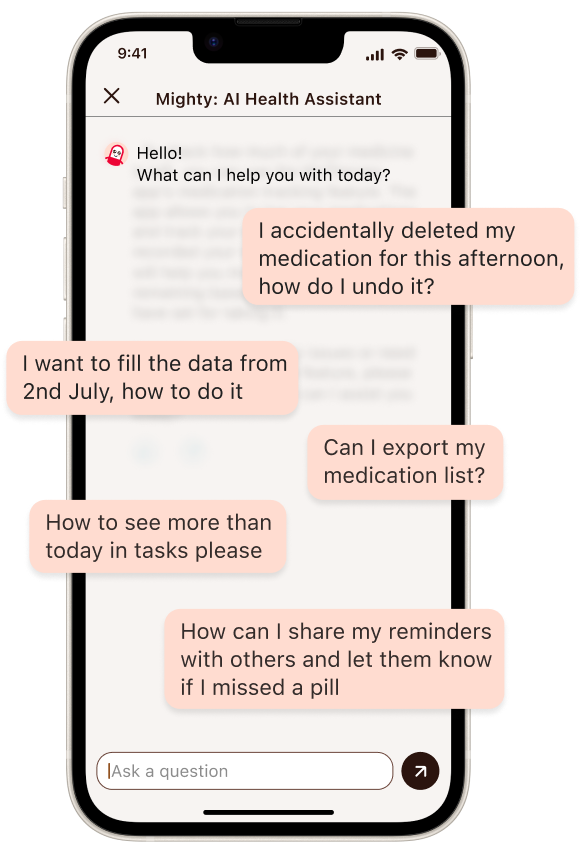
When questions arise between clinical visits, patients can access guidance within the same ecosystem that supports their daily treatment management. Mighty helps users navigate the MyTherapy platform, access verified educational resources, and find relevant information when uncertainty appears during everyday care routines.
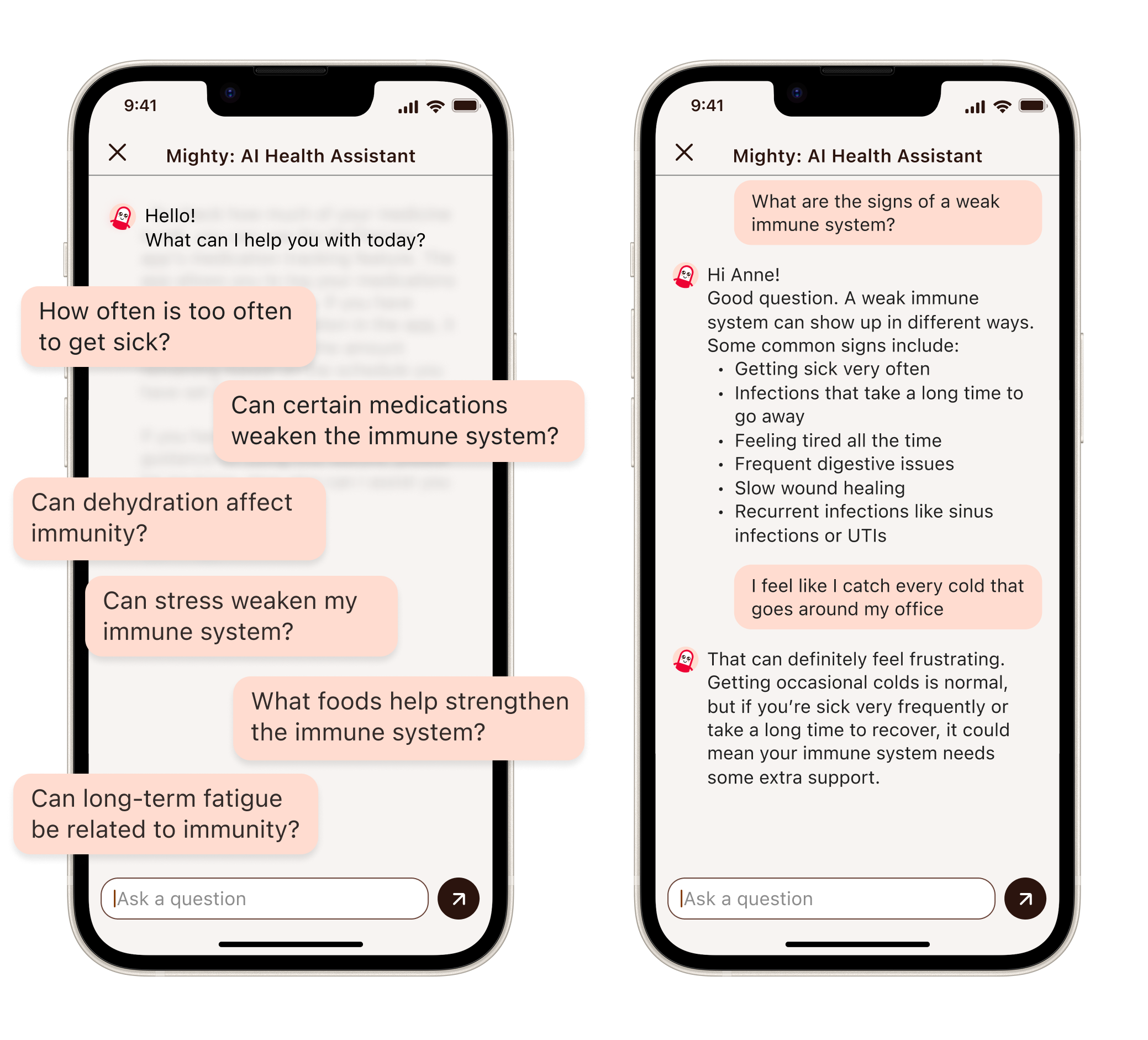
Since its launch, Mighty has already supported more than 50,000 interactions, with nearly 47% of conversations focused on health-related questions. These interactions highlight how frequently patients seek guidance while managing medications and monitoring treatment progress.

Importantly, Mighty does not provide diagnoses or replace professional medical care. Instead, the assistant helps patients access trusted information and encourages consultation with healthcare professionals whenever medical advice is required. In this model, conversational AI does not attempt to replace clinical expertise. It strengthens the patient support system surrounding treatment.
When Questions Appear Between Appointments

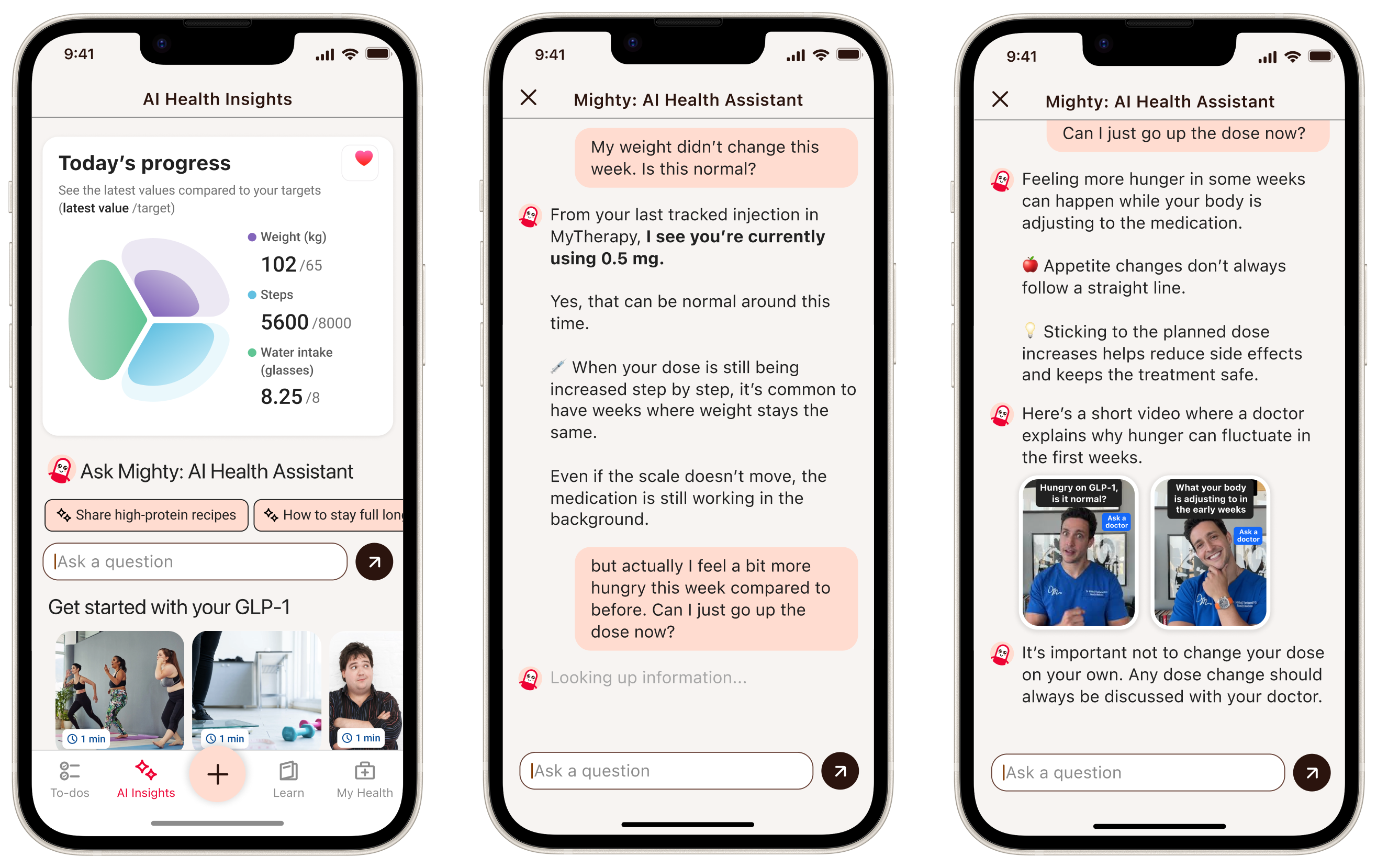
Within MyTherapy, Mighty works alongside medication reminders, health tracking, and progress monitoring. Together, these tools create a structured digital environment that helps patients stay organized, informed, and connected to their treatment. This type of support becomes particularly valuable in long-term therapies, where motivation naturally fluctuates. Patients often begin treatment with strong expectations. Over time, they may encounter plateaus, routine fatigue, or uncertainty about progress. These moments can quietly influence whether patients remain confident in their therapy.

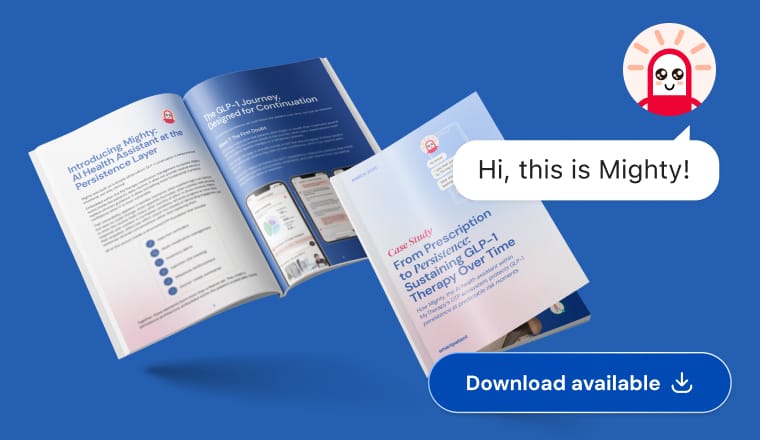
One example appears in weight management programs involving GLP-1 therapies. Many patients experience a moment of doubt several weeks into treatment when progress temporarily slows. Without reassurance, these moments can lead patients to question whether the therapy is working. Our case study, “From Prescription to Persistence: Sustaining GLP-1 Therapy Over Time,” explores how Mighty supports patients during these predictable moments by offering guidance and context when uncertainty arises.

For pharma and digital health leaders, these patterns highlight a broader shift in patient engagement.
Why This Matters for Pharma Programs


For pharma companies building direct-to-patient programs, the rise of conversational AI introduces an important shift.

Patients already seek answers between clinical visits. The question is whether those conversations happen in fragmented digital environments or within trusted ecosystems designed to support treatment.
When AI assistants are integrated into medication management platforms like MyTherapy, patient questions can be addressed within a structured environment that already supports adherence, health tracking, and treatment routines.
This creates new opportunities for pharma programs to:

  • Support patients during everyday moments between clinical visits
  • Provide trusted educational context when questions arise
  • Strengthen engagement across long-term therapies
  • Reinforce confidence during predictable moments of uncertainty

A Responsible Future for AI in Patient Support

AI will continue to play an increasing role in how patients access health information. But in healthcare, the most important question is not how quickly AI spreads, but how responsibly it is implemented. Systems designed around verified information, strong privacy protections, and clear boundaries between guidance and medical advice will play a critical role in ensuring that conversational technologies truly benefit patients. When AI assistants operate within trusted treatment ecosystems, they become more than information tools. They become part of a structured support system that helps patients stay informed, confident, and engaged as they manage their health in everyday life.

From Prescription
to Persistence

Explore how AI-driven support sustain GLP-1 therapy at critical moments.

Every day, millions of people now ask AI about their health.

Instead of searching across multiple websites, many start with a conversation about symptoms, medications, or treatment progress. Recent estimates suggest that more than 40 million people ask AI health-related questions every day, making healthcare one of the fastest growing uses of AI.
But healthcare cannot treat AI like any other digital tool.

In most industries, conversational AI is designed for convenience and speed. In healthcare, the requirements are fundamentally different: accuracy, clinical context, data privacy, and patient safety are essential.

This raises a critical question: If patients are already asking AI about their health, where should those conversations happen?

Increasingly, healthcare leaders believe the answer is clear: inside trusted treatment ecosystems rather than standalone AI tools.  
A 2026 analysis reported by Reuters found that AI systems can generate incorrect medical responses when misinformation appears to come from seemingly authoritative sources. The findings highlight a structural challenge: general-purpose AI models often lack the clinical context and governance frameworks required for healthcare environments.

Why Context Matters in Healthcare AI

Healthcare decisions rarely happen in isolated moments. Most treatments unfold over months or years. Chronic conditions require ongoing management, and adherence often depends on small, everyday decisions that rarely occur in clinical settings. Patients make daily choices about medication routines, interpret treatment progress, and navigate uncertainty long before their next appointment with a healthcare professional.

Conversational AI has the potential to support these moments. But without context, general-purpose AI systems struggle to provide responsible guidance.

They operate outside the environments where patients actually manage their care. For this reason, many healthcare experts increasingly emphasize that AI should operate within trusted treatment ecosystems, rather than as standalone information tools. Inside these environments, conversational support can be combined with medication management, symptom tracking, and verified health information. This creates a far more reliable foundation for patient guidance while ensuring that information is delivered within a structured and trusted healthcare context.

Bringing AI Into the MyTherapy Ecosystem


In March 2025, smartpatient introduced Mighty, a conversational AI health assistant designed to support patients as they manage treatment in their everyday lives.
Rather than operating as a standalone AI tool, Mighty is embedded directly within the MyTherapy medication management ecosystem, a platform used by more than 12 million patients worldwide to manage medications, track health data, and stay on top of treatment routines.


When conversational AI operates inside a treatment management environment, it gains the context that general AI systems lack.
Instead of providing generic health information, Mighty supports patients within the same environment where they already manage medications, monitor symptoms, and follow treatment routines.
This fundamentally changes how conversational AI can assist patients.
When questions arise between clinical visits, patients can access guidance within the same ecosystem that supports their daily treatment management. Mighty helps users navigate the MyTherapy platform, access verified educational resources, and find relevant information when uncertainty appears during everyday care routines.

Since its launch, Mighty has already supported more than 50,000 interactions, with nearly 47% of conversations focused on health-related questions. These interactions highlight how frequently patients seek guidance while managing medications and monitoring treatment progress.

Importantly, Mighty does not provide diagnoses or replace professional medical care. Instead, the assistant helps patients access trusted information and encourages consultation with healthcare professionals whenever medical advice is required. In this model, conversational AI does not attempt to replace clinical expertise. It strengthens the patient support system surrounding treatment.

When Questions Appear Between Appointments

Within MyTherapy, Mighty works alongside medication reminders, health tracking, and progress monitoring. Together, these tools create a structured digital environment that helps patients stay organized, informed, and connected to their treatment. This type of support becomes particularly valuable in long-term therapies, where motivation naturally fluctuates. Patients often begin treatment with strong expectations. Over time, they may encounter plateaus, routine fatigue, or uncertainty about progress. These moments can quietly influence whether patients remain confident in their therapy.

One example appears in weight management programs involving GLP-1 therapies. Many patients experience a moment of doubt several weeks into treatment when progress temporarily slows. Without reassurance, these moments can lead patients to question whether the therapy is working. Our case study, “From Prescription to Persistence: Sustaining GLP-1 Therapy Over Time,” explores how Mighty supports patients during these predictable moments by offering guidance and context when uncertainty arises.

For pharma and digital health leaders, these patterns highlight a broader shift in patient engagement.

Why This Matters for Pharma Programs


For pharma companies building direct-to-patient programs, the rise of conversational AI introduces an important shift.

Patients already seek answers between clinical visits. The question is whether those conversations happen in fragmented digital environments or within trusted ecosystems designed to support treatment.
When AI assistants are integrated into medication management platforms like MyTherapy, patient questions can be addressed within a structured environment that already supports adherence, health tracking, and treatment routines.
This creates new opportunities for pharma programs to:

  • Support patients during everyday moments between clinical visits
  • Provide trusted educational context when questions arise
  • Strengthen engagement across long-term therapies
  • Reinforce confidence during predictable moments of uncertainty

A Responsible Future for AI in Patient Support

AI will continue to play an increasing role in how patients access health information. But in healthcare, the most important question is not how quickly AI spreads, but how responsibly it is implemented. Systems designed around verified information, strong privacy protections, and clear boundaries between guidance and medical advice will play a critical role in ensuring that conversational technologies truly benefit patients. When AI assistants operate within trusted treatment ecosystems, they become more than information tools. They become part of a structured support system that helps patients stay informed, confident, and engaged as they manage their health in everyday life.

Every day, millions of people now ask AI about their health.

Instead of searching across multiple websites, many start with a conversation about symptoms, medications, or treatment progress. Recent estimates suggest that more than 40 million people ask AI health-related questions every day, making healthcare one of the fastest growing uses of AI.
But healthcare cannot treat AI like any other digital tool.

In most industries, conversational AI is designed for convenience and speed. In healthcare, the requirements are fundamentally different: accuracy, clinical context, data privacy, and patient safety are essential.

This raises a critical question: If patients are already asking AI about their health, where should those conversations happen?

Increasingly, healthcare leaders believe the answer is clear: inside trusted treatment ecosystems rather than standalone AI tools.  
A 2026 analysis reported by Reuters found that AI systems can generate incorrect medical responses when misinformation appears to come from seemingly authoritative sources. The findings highlight a structural challenge: general-purpose AI models often lack the clinical context and governance frameworks required for healthcare environments.

Why Context Matters in Healthcare AI

Healthcare decisions rarely happen in isolated moments. Most treatments unfold over months or years. Chronic conditions require ongoing management, and adherence often depends on small, everyday decisions that rarely occur in clinical settings. Patients make daily choices about medication routines, interpret treatment progress, and navigate uncertainty long before their next appointment with a healthcare professional.

Conversational AI has the potential to support these moments. But without context, general-purpose AI systems struggle to provide responsible guidance.

They operate outside the environments where patients actually manage their care. For this reason, many healthcare experts increasingly emphasize that AI should operate within trusted treatment ecosystems, rather than as standalone information tools. Inside these environments, conversational support can be combined with medication management, symptom tracking, and verified health information. This creates a far more reliable foundation for patient guidance while ensuring that information is delivered within a structured and trusted healthcare context.

Bringing AI Into the MyTherapy Ecosystem


In March 2025, smartpatient introduced Mighty, a conversational AI health assistant designed to support patients as they manage treatment in their everyday lives.
Rather than operating as a standalone AI tool, Mighty is embedded directly within the MyTherapy medication management ecosystem, a platform used by more than 12 million patients worldwide to manage medications, track health data, and stay on top of treatment routines.


When conversational AI operates inside a treatment management environment, it gains the context that general AI systems lack.
Instead of providing generic health information, Mighty supports patients within the same environment where they already manage medications, monitor symptoms, and follow treatment routines.
This fundamentally changes how conversational AI can assist patients.
When questions arise between clinical visits, patients can access guidance within the same ecosystem that supports their daily treatment management. Mighty helps users navigate the MyTherapy platform, access verified educational resources, and find relevant information when uncertainty appears during everyday care routines.

Since its launch, Mighty has already supported more than 50,000 interactions, with nearly 47% of conversations focused on health-related questions. These interactions highlight how frequently patients seek guidance while managing medications and monitoring treatment progress.

Importantly, Mighty does not provide diagnoses or replace professional medical care. Instead, the assistant helps patients access trusted information and encourages consultation with healthcare professionals whenever medical advice is required. In this model, conversational AI does not attempt to replace clinical expertise. It strengthens the patient support system surrounding treatment.

When Questions Appear Between Appointments

Within MyTherapy, Mighty works alongside medication reminders, health tracking, and progress monitoring. Together, these tools create a structured digital environment that helps patients stay organized, informed, and connected to their treatment. This type of support becomes particularly valuable in long-term therapies, where motivation naturally fluctuates. Patients often begin treatment with strong expectations. Over time, they may encounter plateaus, routine fatigue, or uncertainty about progress. These moments can quietly influence whether patients remain confident in their therapy.

One example appears in weight management programs involving GLP-1 therapies. Many patients experience a moment of doubt several weeks into treatment when progress temporarily slows. Without reassurance, these moments can lead patients to question whether the therapy is working. Our case study, “From Prescription to Persistence: Sustaining GLP-1 Therapy Over Time,” explores how Mighty supports patients during these predictable moments by offering guidance and context when uncertainty arises.

For pharma and digital health leaders, these patterns highlight a broader shift in patient engagement.

Why This Matters for Pharma Programs


For pharma companies building direct-to-patient programs, the rise of conversational AI introduces an important shift.

Patients already seek answers between clinical visits. The question is whether those conversations happen in fragmented digital environments or within trusted ecosystems designed to support treatment.
When AI assistants are integrated into medication management platforms like MyTherapy, patient questions can be addressed within a structured environment that already supports adherence, health tracking, and treatment routines.
This creates new opportunities for pharma programs to:

  • Support patients during everyday moments between clinical visits
  • Provide trusted educational context when questions arise
  • Strengthen engagement across long-term therapies
  • Reinforce confidence during predictable moments of uncertainty

A Responsible Future for AI in Patient Support

AI will continue to play an increasing role in how patients access health information. But in healthcare, the most important question is not how quickly AI spreads, but how responsibly it is implemented. Systems designed around verified information, strong privacy protections, and clear boundaries between guidance and medical advice will play a critical role in ensuring that conversational technologies truly benefit patients. When AI assistants operate within trusted treatment ecosystems, they become more than information tools. They become part of a structured support system that helps patients stay informed, confident, and engaged as they manage their health in everyday life.

Learn how to increase patient adherence using digital tools.

Adherence Insights

Digital Tools

Practical Guide

Discover proven steps to build a PSP that works.

Case Study

Insights

Results

Gain actionable insights into diabetes treatment behavior.

RWE Report

Patient Data

AI Insights