Related Content



Key Takeaways
What Direct-to-Patient Marketing Means in Pharma
Direct-to-patient (DTP) and direct-to-consumer (DTC) marketing describe how pharma reaches patients outside clinical settings. The regulatory environments differ.
In the United States, DTC allows branded advertising.
In Europe, DTP focuses on unbranded education because promotion is prohibited.
But the real shift is not regulatory. It is how the model itself has evolved.
Traditional DTC was advertising.
Modern DTC is access.
Patients now search, self-assess, and make early decisions long before meeting a doctor. Modern DTC meets them in these moments with trustworthy information, clear risk framing, and guidance that reduces early uncertainty. It helps people recognise symptoms, understand what matters, and take the next step confidently.
Most delays in care happen before the doctor visit. Confusion, stigma, lack of health literacy, and not knowing where to begin often stop patients from seeking care.
Modern DTC eliminates these barriers by offering clarity at the exact moment It is needed.
Pharma is shifting toward integrated, patient-first engagement for this reason. Platforms like MyTherapy provide a compliant, fully integrated DTP ecosystem where education and activation work together, turning early awareness into real-world decisions.
For pharma companies, patient activation extends the value of direct-to-patient marketing by helping patients move beyond receiving information to taking meaningful action. Through timely, behavior-based support, activation strengthens engagement, improves adherence, and increases the long-term impact of DTP programs.
Why DTC Pharma Advertising Has Evolved in 2026
DTC has changed because patient behaviour has changed.
Patients no longer wait for clinical conversations. They expect instant clarity, mobile-first guidance, and support that feels tailored to their needs.
Digital access is now the real competitive advantage. Pharma is moving from isolated awareness campaigns to integrated digital ecosystems that help patients understand risks, assess symptoms, and take early steps toward care.
The obesity space in the United States shows how effective this model can be. Patients move more quickly from awareness to diagnosis because the journey was connected and friction-free.
Europe’s regulatory environment makes this approach even more relevant. With branded promotion restricted, pharma relies on educational and activation-based pathways that help patients move forward safely and in a fully compliant way. This is where modern DTP creates its strongest impact.
Many pharma companies are therefore investing in patient activation strategies that combine education with timely, behavior-based support to help patients take the next step in their care journey while remaining fully compliant.
The Role of Digital Channels in Direct-to-Patient Communication
Digital channels are now the first point of contact for most patients. Search, social, video, and mobile apps shape how people interpret symptoms, assess risks, and decide what to do next. This makes digital communication central to modern DTC. It lets pharma provide clear, timely information exactly when patients look for answers.
Digital ecosystems also create continuity. Instead of a single touchpoint, patients receive ongoing education and consistent support that build understanding and trust over time.
In Europe, digital channels offer a compliant and trusted space for patient education. They support non-promotional pathways that build awareness, readiness, and confidence.
The result is a smoother, more guided journey from curiosity to action.
What Good DTC Pharma Marketing Looks Like Today
Good DTC supports patients in moving forward by offering clear and relevant information that reflects their needs rather than brand priorities.
In pharma, effective approaches balance reach with activation so patients not only see a message but also understand what to do next. Approaches focused mainly on reach often fall short because patients are left without a clear direction.
Measurement is also shifting. Success is moving beyond impressions toward a more meaningful view of progress along the patient journey, from initial understanding to readiness to act.
The Critical Role of Patient Education and Activation in DTC Campaigns
Awareness does not equal behavior change. Patients often know something is wrong yet still hesitate. Uncertainty creates the gap between knowing and doing, and activation closes it.
Activation explains risks in simple terms, shows what the next step looks like, and reinforces confidence. It turns curiosity into commitment by making action feel achievable.
Education sparks interest. Activation turns interest into progress.
For pharma teams, patient activation transforms education from a communication activity into a measurable engagement strategy supporting stronger patient participation, improved adherence, and more effective patient support programs.
In Europe, activation is both effective and compliant. Educational pathways, decision support, and behavioural guidance align with regulatory expectations while improving real patient outcomes.
Explore how direct-to-patient strategies can be implemented for your patients?
→ Talk to a Patient Activation Expert
How Pharma Can Use Patient Activation-Driven DTC Campaigns to Improve Outcomes
Pharma can improve outcomes by combining broad DTC reach with activation pathways that support real patient decisions. When patients receive clear information and practical next steps, the early stages of the journey become more manageable and less overwhelming.
Activation reduces the drop-off that happens between searching for a symptom and taking action by offering timely clarity and direction. In Europe, this approach fits naturally within regulatory boundaries while still enabling meaningful patient impact.
Activation also increases the effectiveness of media investment. Awareness alone creates interest. Awareness supported by activation creates progress.
Integrated DTP also delivers greater value when built on a compliant, partnership-grounded and digitally enabled foundation.
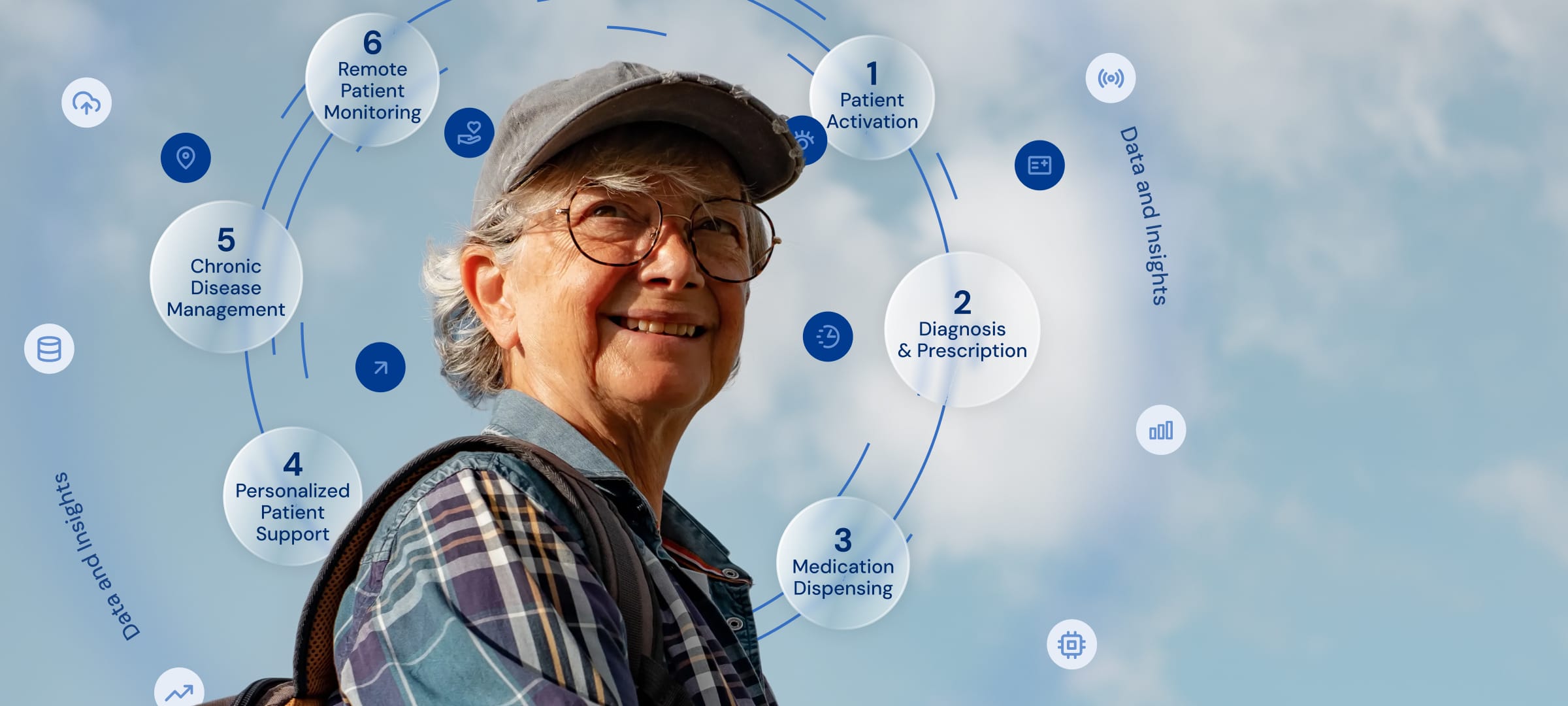
Smartpatient provides an end-to-end DTP model that spans awareness, diagnosis and prescription support, dispensing and adherence. By engaging and empowering patients through targeted activation, the platform generates unique connected data that informs brand decisions and strengthens real-world performance. This creates scalable value for partners and better experiences for patients.
Direct-to-patient marketing creates awareness. Patient activation transforms that awareness into measurable patient engagement and long-term outcomes.
See how patient activation can strengthen your direct-to-patient strategy.
→ Book a free consultation with one of our Patient Activation experts