
Pharma Patient Communication: Building Trust That Drives Outcomes

Pharma Patient Communication: Building Trust That Drives Outcomes

Pharma Patient CommunicationPharma Patient Communication

Key Takeaways

Pharma patient communication is no longer a supporting layer. It is a core performance driver.

Real-world outcomes depend less on what is prescribed in the clinic and more on how patients act between visits. As care shifts toward chronic and specialty conditions, adherence, persistence, and self-management determine whether therapies deliver their intended value outside controlled trials.

At its strongest, effective patient communication translates clinical complexity into practical action. It reduces uncertainty, sets expectations, and provides structured, compliant guidance that patients can use confidently in daily life.

Why Communication Matters in Real-World Care

Unlike HCP communication, patient communication cannot rely on shared terminology or clinical training. It must work across varying levels of health literacy while remaining fully compliant. Patients need clarity around what to expect, what is normal, what requires attention, and what to do next.

Yet information alone rarely changes behavior. Patients may understand the rationale for therapy and still struggle once treatment meets routine friction, competing priorities, and uncertainty. The gap between knowledge and consistent action is where most digital programs lose momentum.

Leading pharma companies now invest in connected engagement frameworks that reinforce communication over time rather than treating it as a one-off campaign.

For best practices on structured awareness strategies, see our Patient Awareness Campaigns.

Effective Channels and Strategies for Modern Pharma Communication

Strong patient communication is not about selecting a single channel. It is about building continuity across touchpoints so patients feel consistently supported throughout their journey.

Connected Digital Engagement

Patients move fluidly between search engines, brand websites, pharmacies, consultations, and digital tools. High-performing programs reflect this reality by connecting email journeys, SMS reminders, in-app education, onboarding flows, and refill prompts into one coordinated system.

When each touchpoint reinforces the next, support feels intentional rather than fragmented, improving retention and reducing early treatment discontinuation.

See how this model increases preventive action: Increasing Preventive Kidney Testing Through Patient Activation on MyTherapy.

Structured Education That Reduces Uncertainty

Patient education works best when it is practical and layered. Clear FAQs, short modules, and “what happens next” guidance reduce ambiguity at key decision points.

The World Health Organization emphasizes that health literacy is not just about accessing information, but about applying it to real-life decisions. For pharma and digital health organizations, that means designing content that supports follow-through, not just understanding.

Information becomes more effective when it is reinforced across formats and over time.

Advocacy and Unbranded Education Initiatives

Co-created resources with patient organizations strengthen credibility while maintaining compliance. When advocacy efforts fill genuine informational gaps, patients perceive authenticity rather than promotion.

European regulatory guidance emphasizes readability and clarity. Designing with simplicity at the center improves both compliance and engagement.

Support Programs That Remove Friction

Education sets expectations. Support programs operationalize them.

Onboarding journeys, refill reminders, monitoring prompts, and structured follow-ups help patients transform knowledge into repeatable habits.

Evidence shows that adherence improves significantly when education is paired with behavioral reinforcement.

When these elements are integrated, communication evolves from static information into a sustained support system.

Overcoming Barriers in Patient Communication

Even well-designed initiatives encounter predictable challenges. Addressing them early supports scalable performance.

Complexity That Creates Friction

Dense or overly clinical content increases cognitive load. Patients rarely voice confusion; they simply disengage.

Plain-language guidance from public health authorities such as the Centers for Disease Control and Prevention recommends leading with key messages and structuring content clearly to improve comprehension and adherence.

Regulatory Caution That Limits Usefulness

Compliance is non-negotiable. However, over-simplification or excessive caution can reduce actionable value. European readability guidelines explicitly emphasize that patients must fully understand approved content. Patient understanding is an expectation, not an optional enhancement.

The goal is not to simplify beyond compliance. It is to make compliant information actionable.

Mistrust and Fragmented Digital Experiences

Patients cross-reference information across search engines, social media, peer forums, and family discussions. When pharma communication feels disconnected from their lived reality, trust erodes quickly.

Fragmented digital experiences compound this mistrust. Multiple logins, inconsistent messaging across platforms, and siloed programs signal disorganization, prompting patients to question reliability.

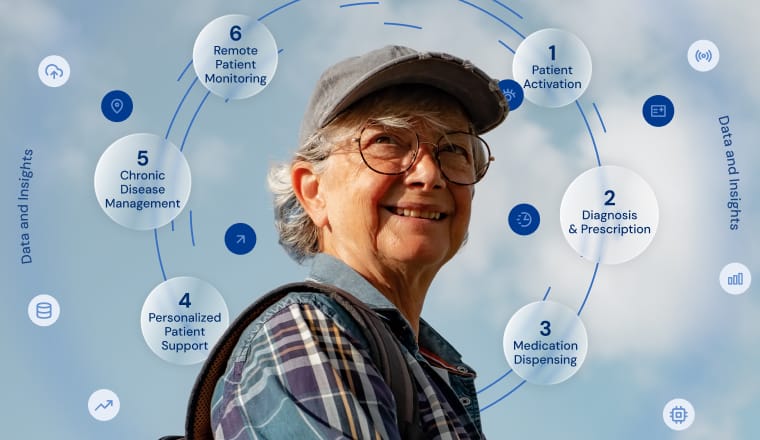
Integrated continuity across awareness, education, monitoring, and support restores coherence. A single, seamless ecosystem builds trust through consistent reinforcement over time.

To see this in action, read: Turning Digital Engagement into Measurable Preventive Health Impact with MyTherapy

From Communication to Sustained Action

Communication builds understanding. Awareness creates relevance. But sustained action determines outcomes.

Many patients discontinue or disengage not because they reject therapy, but because daily friction accumulates. Small uncertainties, competing priorities, and routine disruptions erode follow-through.

Structured engagement closes that gap. Timely reminders, behavioral nudges, and reinforcement at key moments help transform initial intent into consistent action. This is where communication becomes measurable impact: improved adherence and persistence, stronger continuity of care, and greater return on investment for pharma programs.

Readiness insights can further refine strategy. Tools such as the Patient Activation Measure help tailor communication to patient capability and readiness. Learn more in our Patient Activation Measure Guide.

The Strategic Imperative

In today’s pharma landscape, patient communication must function as part of a connected engagement ecosystem that reinforces behavior over time.

Without reinforcement, communication informs.
With reinforcement, communication performs.

For pharma and digital health organizations seeking stronger real-world outcomes, the focus is shifting from isolated messages to integrated, compliant, behavior-driven systems that turn understanding into long-term adherence.

Ready to strengthen your patient communication strategy?

Contact our team to explore how activation campaigns can drive measurable adherence and long-term value.

Pharma patient communication is no longer a supporting layer. It is a core performance driver.

Real-world outcomes depend less on what is prescribed in the clinic and more on how patients act between visits. As care shifts toward chronic and specialty conditions, adherence, persistence, and self-management determine whether therapies deliver their intended value outside controlled trials.

At its strongest, effective patient communication translates clinical complexity into practical action. It reduces uncertainty, sets expectations, and provides structured, compliant guidance that patients can use confidently in daily life.

Why Communication Matters in Real-World Care

Unlike HCP communication, patient communication cannot rely on shared terminology or clinical training. It must work across varying levels of health literacy while remaining fully compliant. Patients need clarity around what to expect, what is normal, what requires attention, and what to do next.

Yet information alone rarely changes behavior. Patients may understand the rationale for therapy and still struggle once treatment meets routine friction, competing priorities, and uncertainty. The gap between knowledge and consistent action is where most digital programs lose momentum.

Leading pharma companies now invest in connected engagement frameworks that reinforce communication over time rather than treating it as a one-off campaign.

For best practices on structured awareness strategies, see our Patient Awareness Campaigns.

Effective Channels and Strategies for Modern Pharma Communication

Strong patient communication is not about selecting a single channel. It is about building continuity across touchpoints so patients feel consistently supported throughout their journey.

Connected Digital Engagement

Patients move fluidly between search engines, brand websites, pharmacies, consultations, and digital tools. High-performing programs reflect this reality by connecting email journeys, SMS reminders, in-app education, onboarding flows, and refill prompts into one coordinated system.

When each touchpoint reinforces the next, support feels intentional rather than fragmented, improving retention and reducing early treatment discontinuation.

See how this model increases preventive action: Increasing Preventive Kidney Testing Through Patient Activation on MyTherapy.

Structured Education That Reduces Uncertainty

Patient education works best when it is practical and layered. Clear FAQs, short modules, and “what happens next” guidance reduce ambiguity at key decision points.

The World Health Organization emphasizes that health literacy is not just about accessing information, but about applying it to real-life decisions. For pharma and digital health organizations, that means designing content that supports follow-through, not just understanding.

Information becomes more effective when it is reinforced across formats and over time.

Advocacy and Unbranded Education Initiatives

Co-created resources with patient organizations strengthen credibility while maintaining compliance. When advocacy efforts fill genuine informational gaps, patients perceive authenticity rather than promotion.

European regulatory guidance emphasizes readability and clarity. Designing with simplicity at the center improves both compliance and engagement.

Support Programs That Remove Friction

Education sets expectations. Support programs operationalize them.

Onboarding journeys, refill reminders, monitoring prompts, and structured follow-ups help patients transform knowledge into repeatable habits.

Evidence shows that adherence improves significantly when education is paired with behavioral reinforcement.

When these elements are integrated, communication evolves from static information into a sustained support system.

Overcoming Barriers in Patient Communication

Even well-designed initiatives encounter predictable challenges. Addressing them early supports scalable performance.

Complexity That Creates Friction

Dense or overly clinical content increases cognitive load. Patients rarely voice confusion; they simply disengage.

Plain-language guidance from public health authorities such as the Centers for Disease Control and Prevention recommends leading with key messages and structuring content clearly to improve comprehension and adherence.

Regulatory Caution That Limits Usefulness

Compliance is non-negotiable. However, over-simplification or excessive caution can reduce actionable value. European readability guidelines explicitly emphasize that patients must fully understand approved content. Patient understanding is an expectation, not an optional enhancement.

The goal is not to simplify beyond compliance. It is to make compliant information actionable.

Mistrust and Fragmented Digital Experiences

Patients cross-reference information across search engines, social media, peer forums, and family discussions. When pharma communication feels disconnected from their lived reality, trust erodes quickly.

Fragmented digital experiences compound this mistrust. Multiple logins, inconsistent messaging across platforms, and siloed programs signal disorganization, prompting patients to question reliability.

Integrated continuity across awareness, education, monitoring, and support restores coherence. A single, seamless ecosystem builds trust through consistent reinforcement over time.

To see this in action, read: Turning Digital Engagement into Measurable Preventive Health Impact with MyTherapy

From Communication to Sustained Action

Communication builds understanding. Awareness creates relevance. But sustained action determines outcomes.

Many patients discontinue or disengage not because they reject therapy, but because daily friction accumulates. Small uncertainties, competing priorities, and routine disruptions erode follow-through.

Structured engagement closes that gap. Timely reminders, behavioral nudges, and reinforcement at key moments help transform initial intent into consistent action. This is where communication becomes measurable impact: improved adherence and persistence, stronger continuity of care, and greater return on investment for pharma programs.

Readiness insights can further refine strategy. Tools such as the Patient Activation Measure help tailor communication to patient capability and readiness. Learn more in our Patient Activation Measure Guide.

The Strategic Imperative

In today’s pharma landscape, patient communication must function as part of a connected engagement ecosystem that reinforces behavior over time.

Without reinforcement, communication informs.
With reinforcement, communication performs.

For pharma and digital health organizations seeking stronger real-world outcomes, the focus is shifting from isolated messages to integrated, compliant, behavior-driven systems that turn understanding into long-term adherence.

Pharma patient communication is no longer a supporting layer. It is a core performance driver.

Real-world outcomes depend less on what is prescribed in the clinic and more on how patients act between visits. As care shifts toward chronic and specialty conditions, adherence, persistence, and self-management determine whether therapies deliver their intended value outside controlled trials.

At its strongest, effective patient communication translates clinical complexity into practical action. It reduces uncertainty, sets expectations, and provides structured, compliant guidance that patients can use confidently in daily life.

Why Communication Matters in Real-World Care

Unlike HCP communication, patient communication cannot rely on shared terminology or clinical training. It must work across varying levels of health literacy while remaining fully compliant. Patients need clarity around what to expect, what is normal, what requires attention, and what to do next.

Yet information alone rarely changes behavior. Patients may understand the rationale for therapy and still struggle once treatment meets routine friction, competing priorities, and uncertainty. The gap between knowledge and consistent action is where most digital programs lose momentum.

Leading pharma companies now invest in connected engagement frameworks that reinforce communication over time rather than treating it as a one-off campaign.

For best practices on structured awareness strategies, see our Patient Awareness Campaigns.

Effective Channels and Strategies for Modern Pharma Communication

Strong patient communication is not about selecting a single channel. It is about building continuity across touchpoints so patients feel consistently supported throughout their journey.

Connected Digital Engagement

Patients move fluidly between search engines, brand websites, pharmacies, consultations, and digital tools. High-performing programs reflect this reality by connecting email journeys, SMS reminders, in-app education, onboarding flows, and refill prompts into one coordinated system.

When each touchpoint reinforces the next, support feels intentional rather than fragmented, improving retention and reducing early treatment discontinuation.

See how this model increases preventive action: Increasing Preventive Kidney Testing Through Patient Activation on MyTherapy.

Structured Education That Reduces Uncertainty

Patient education works best when it is practical and layered. Clear FAQs, short modules, and “what happens next” guidance reduce ambiguity at key decision points.

The World Health Organization emphasizes that health literacy is not just about accessing information, but about applying it to real-life decisions. For pharma and digital health organizations, that means designing content that supports follow-through, not just understanding.

Information becomes more effective when it is reinforced across formats and over time.

Advocacy and Unbranded Education Initiatives

Co-created resources with patient organizations strengthen credibility while maintaining compliance. When advocacy efforts fill genuine informational gaps, patients perceive authenticity rather than promotion.

European regulatory guidance emphasizes readability and clarity. Designing with simplicity at the center improves both compliance and engagement.

Support Programs That Remove Friction

Education sets expectations. Support programs operationalize them.

Onboarding journeys, refill reminders, monitoring prompts, and structured follow-ups help patients transform knowledge into repeatable habits.

Evidence shows that adherence improves significantly when education is paired with behavioral reinforcement.

When these elements are integrated, communication evolves from static information into a sustained support system.

Overcoming Barriers in Patient Communication

Even well-designed initiatives encounter predictable challenges. Addressing them early supports scalable performance.

Complexity That Creates Friction

Dense or overly clinical content increases cognitive load. Patients rarely voice confusion; they simply disengage.

Plain-language guidance from public health authorities such as the Centers for Disease Control and Prevention recommends leading with key messages and structuring content clearly to improve comprehension and adherence.

Regulatory Caution That Limits Usefulness

Compliance is non-negotiable. However, over-simplification or excessive caution can reduce actionable value. European readability guidelines explicitly emphasize that patients must fully understand approved content. Patient understanding is an expectation, not an optional enhancement.

The goal is not to simplify beyond compliance. It is to make compliant information actionable.

Mistrust and Fragmented Digital Experiences

Patients cross-reference information across search engines, social media, peer forums, and family discussions. When pharma communication feels disconnected from their lived reality, trust erodes quickly.

Fragmented digital experiences compound this mistrust. Multiple logins, inconsistent messaging across platforms, and siloed programs signal disorganization, prompting patients to question reliability.

Integrated continuity across awareness, education, monitoring, and support restores coherence. A single, seamless ecosystem builds trust through consistent reinforcement over time.

To see this in action, read: Turning Digital Engagement into Measurable Preventive Health Impact with MyTherapy

From Communication to Sustained Action

Communication builds understanding. Awareness creates relevance. But sustained action determines outcomes.

Many patients discontinue or disengage not because they reject therapy, but because daily friction accumulates. Small uncertainties, competing priorities, and routine disruptions erode follow-through.

Structured engagement closes that gap. Timely reminders, behavioral nudges, and reinforcement at key moments help transform initial intent into consistent action. This is where communication becomes measurable impact: improved adherence and persistence, stronger continuity of care, and greater return on investment for pharma programs.

Readiness insights can further refine strategy. Tools such as the Patient Activation Measure help tailor communication to patient capability and readiness. Learn more in our Patient Activation Measure Guide.

The Strategic Imperative

In today’s pharma landscape, patient communication must function as part of a connected engagement ecosystem that reinforces behavior over time.

Without reinforcement, communication informs.
With reinforcement, communication performs.

For pharma and digital health organizations seeking stronger real-world outcomes, the focus is shifting from isolated messages to integrated, compliant, behavior-driven systems that turn understanding into long-term adherence.

Learn how to increase patient adherence using digital tools.

Adherence Insights

Digital Tools

Practical Guide

Discover proven steps to build a PSP that works.

Case Study

Insights

Results

Gain actionable insights into diabetes treatment behavior.

RWE Report

Patient Data

AI Insights