Related Content


Key Takeaways
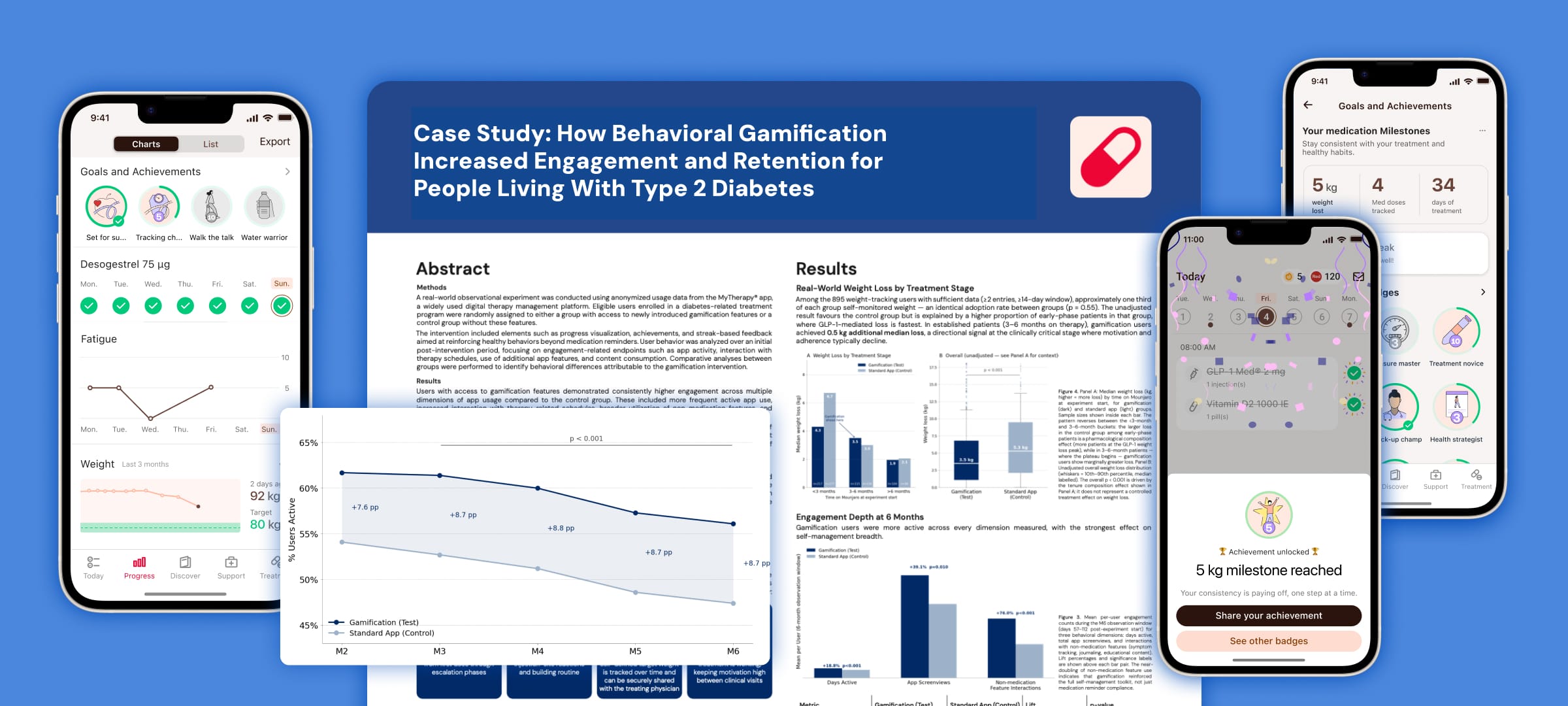
- Smartpatient analyzed anonymized real-world data from people living with type 2 diabetes in Germany using the MyTherapy app, focused on users tracking weekly injectable therapies. The analysis compared the standard app experience to an enhanced experience that added a behavioral gamification layer.
- Across a six-month follow-up, the enhanced experience was associated with stronger engagement and higher active retention.
- The largest engagement lift was in non-medication features, suggesting that behavioral reinforcement may support broader self-management behaviors, not only adherence prompts.
Study and Program Context
Population: People living with type 2 diabetes using MyTherapy in Germany, tracking weekly injectable diabetes therapies.
Setting: Digital self-management support within a medication reminder and health-tracking app.
Program intent: Strengthen engagement with self-management behaviors over time through behavioral design, without changing the underlying treatment pathway.
Challenge
Most patient support programs can drive early engagement. Sustaining it is the real challenge.
For patients managing weekly injectable therapies, common self-management challenges include:
- Staying on schedule
- Building consistent injection routines
- Tracking health over time
- Maintaining motivation across months of treatment
For pharma teams, the core problem is not a lack of information. It is whether digital support can help patients build routines that last.
Solution
A behavioral gamification layer around existing self-management behaviors
The MyTherapy app already supported self-management through features such as:
- Injection reminders
- Injection site logging
- Weight and symptom diary
- Progress statistics and milestones
To evaluate whether behavioral design could strengthen engagement with these existing behaviors, an enhanced digital experience introduced a gamification layer built around three reinforcement mechanisms:
- Progress visualization (therapy streaks and milestones)
- Achievement badges (recognition for consistent medication intake and health tracking)
- Streak-based feedback (positive reinforcement to encourage return visits and sustained routines)
Important: The treatment pathway remained unchanged. Only the digital experience differed. In this context, gamification was designed as behavioral reinforcement, not as entertainment.
Analysis Approach
- Data source: Anonymized real-world app usage data
- Comparison: Standard app experience vs. enhanced experience with behavioral gamification
- Patients: 2,944
- Follow-up: 6 months
- Definition of active engagement: Presence in at least one two-week activity window per measurement period
- Weight analysis: Exploratory and limited to patients who actively tracked weight
Results: Engagement Outcomes (6-month follow-up)
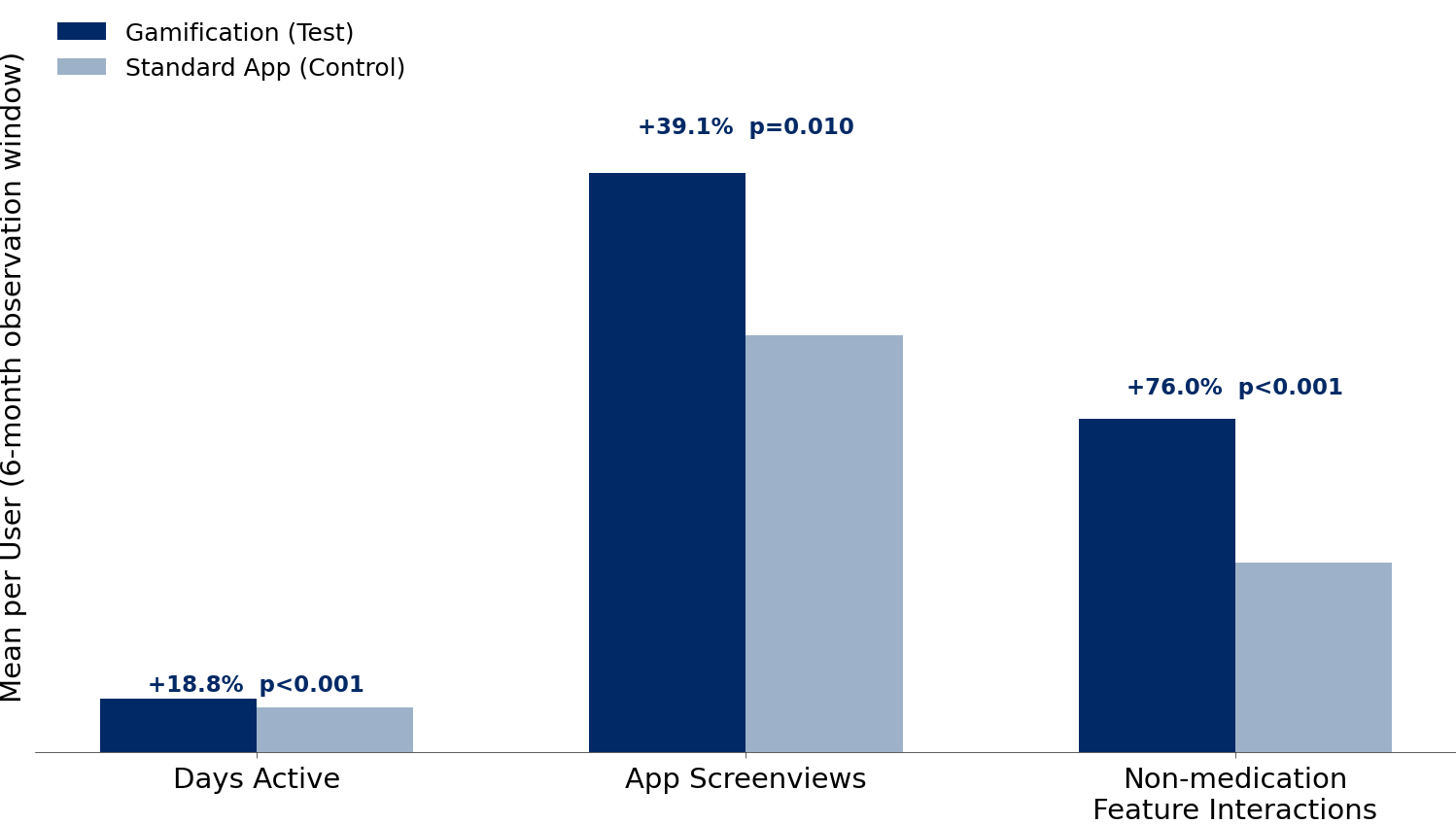
Compared with the standard experience, patients using the enhanced experience showed:
- +18% more active days
- +39% more app screen views
- +76% more interactions with non-medication features
- +8.8 percentage points (pp) higher active retention
Notably, the biggest improvement was in non-medication features such as symptom tracking, educational content, and health logging. This suggests behavioral design may reinforce broader self-management behaviors beyond medication reminders alone.
Retention Outcomes
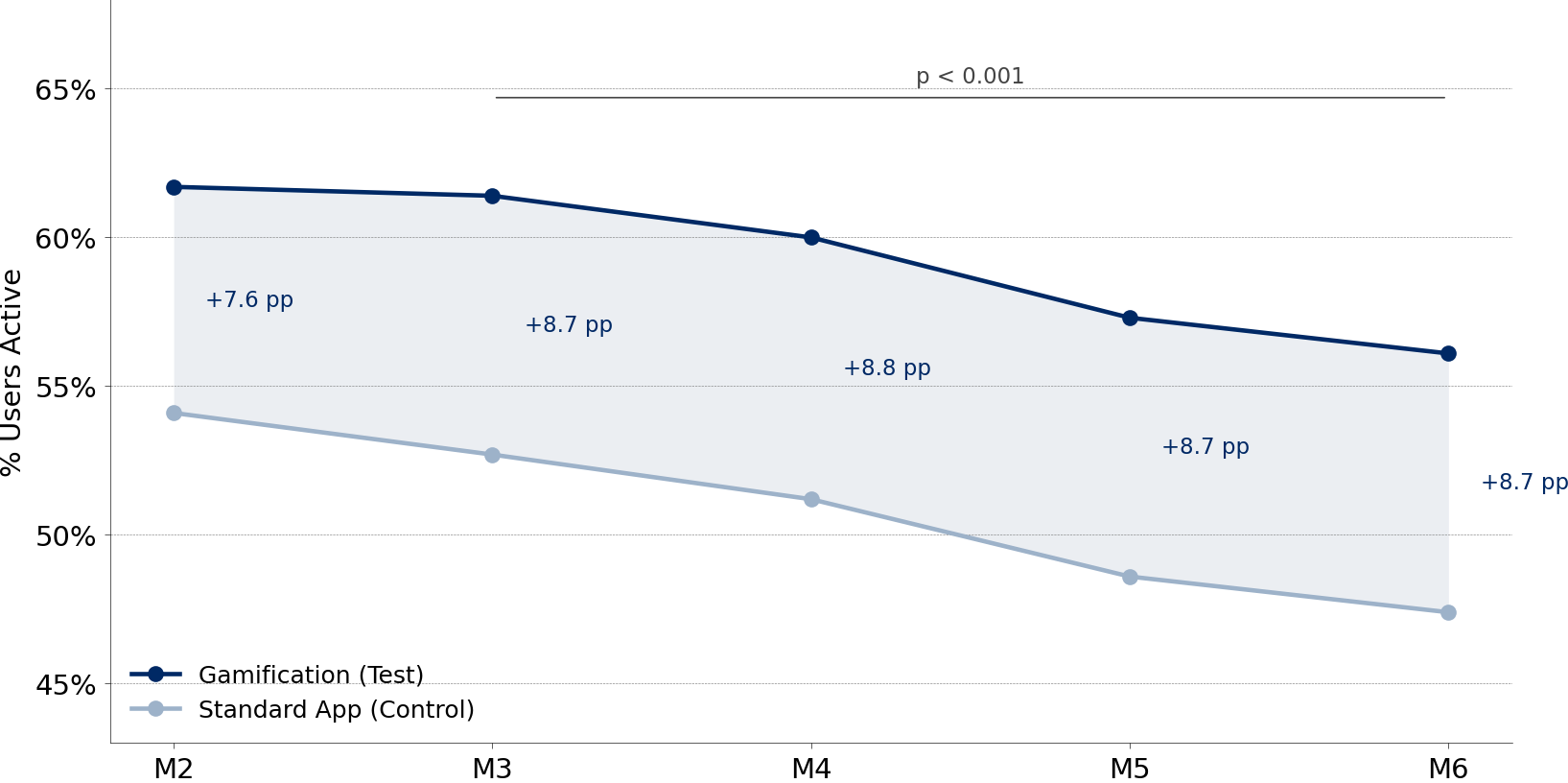
By month 2, patients using the enhanced experience demonstrated higher active retention than those using the standard experience. From month 3 onward, the advantage remained stable at approximately 8.7 to 8.8 percentage points (pp), with a sustained 8.7 to 8.8 percentage point difference from months 4 to 6.
This stability suggests the effect may not be limited to an early novelty response.
Exploratory Outcome: Weight Trends by Treatment Stage
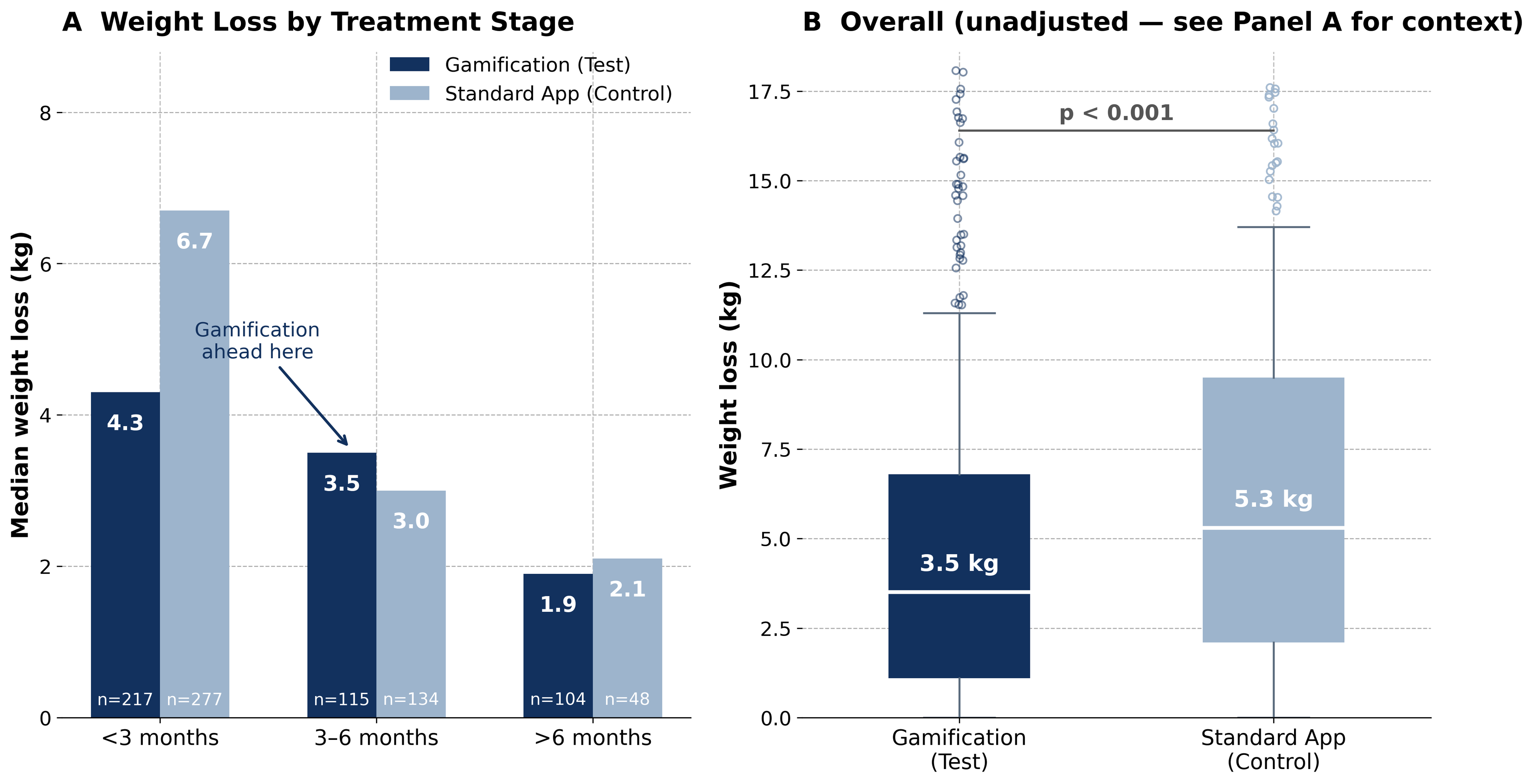
Among the 895 patients who actively tracked weight, overall weight loss initially favored the control group, which included a higher proportion of patients earlier in treatment.
However, among patients who had already been on therapy for three to six months, the pattern reversed: patients using the enhanced experience achieved an additional 0.5 kg median weight loss.
Interpretation note: This finding is exploratory and should be treated as hypothesis-generating.
What This Means for Pharma Teams
This analysis supports a practical takeaway for teams designing Direct-to-Patient support programs: engagement is not created by adding more content. It is strengthened by helping patients return to meaningful self-management behaviors over time.
Three design principles emerged:
- Make progress visible
- Reward consistency, not just completion
- Support behaviors beyond medication reminders
Compliance and Transparency
Conflict of interest statement: The behavioral gamification features evaluated in this study were developed in collaboration with an industry partner involved in diabetes therapy. The partner co-invested in feature development but had no influence on the study design, data analysis, interpretation of results, or the conclusions presented.
References
- Pal K et al. Cochrane Database of Systematic Reviews (2013).
- Cugelman B. JMIR Serious Games (2013); 1(1): e3.

Turn engagement into real-world evidence
smartpatient helps pharma teams design Direct-to-Patient programs that support long-term self-management and generate deep, longitudinal engagement insights through MyTherapy.
Design patient activation campaigns built for measurable engagement.
Plan targeted campaigns across the MyTherapy and Redcare ecosystems with audience, channel, and engagement recommendations tailored to your activation goals.
This is the default text value
This is the default text value
This is the default text value